Fat Grafting
Overview
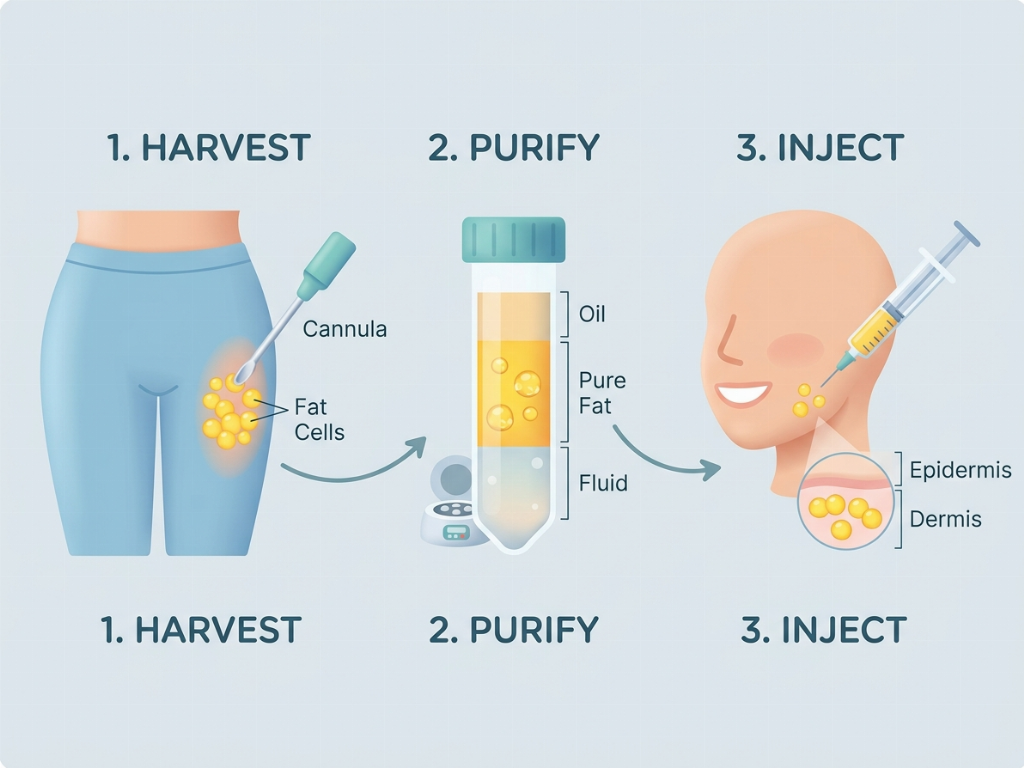
Fat grafting, also known as autologous fat transfer, is a two-in-one procedure that reshapes the body by moving your own living tissue. It involves harvesting excess fat from a 'donor site'—typically the abdomen, thighs, or flanks—via gentle liposuction. This fat is then purified and meticulously reinjected into areas that require more volume or contouring.
Unlike synthetic fillers or implants, fat grafting uses your own biological material, which eliminates the risk of allergic reactions or rejection. In South Korea, surgeons often use advanced centrifugation and filtration techniques to ensure a high 'survival rate' of the transferred fat cells, leading to more predictable and long-lasting results.
Expected Results
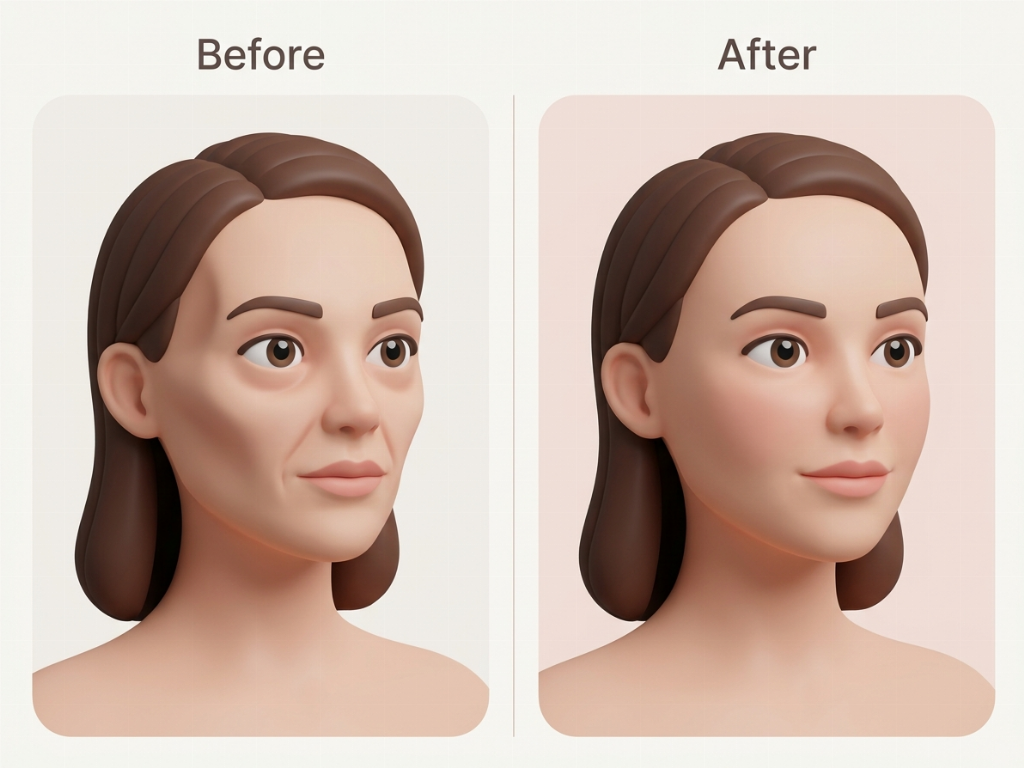
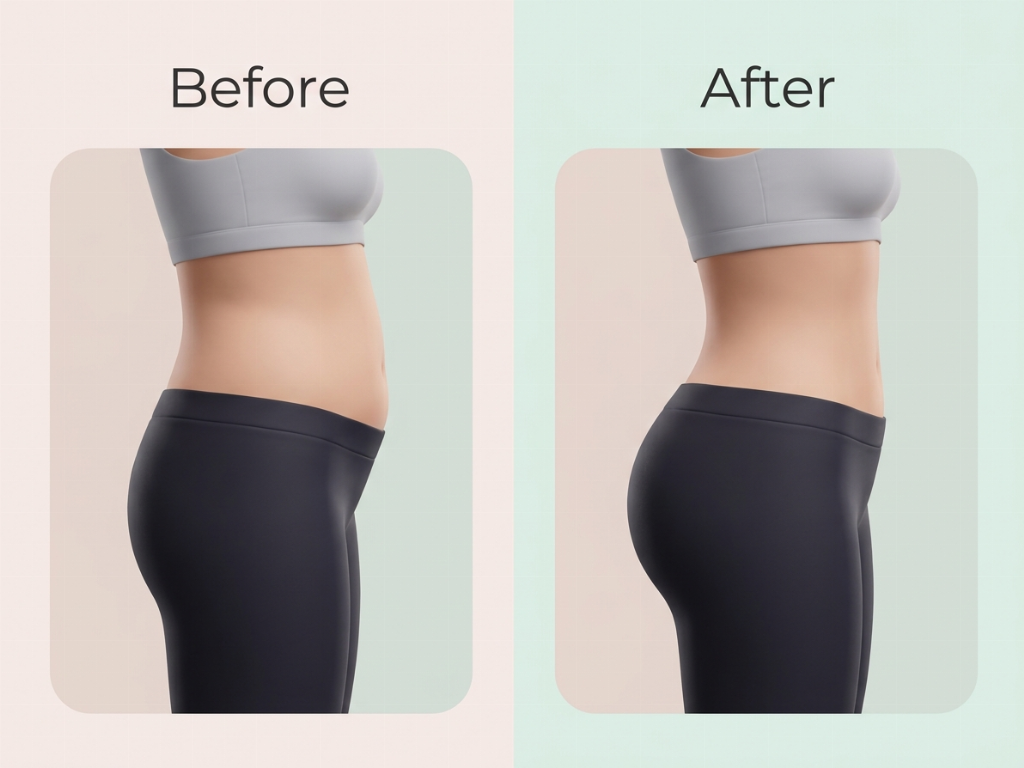
The primary goal of fat grafting is to achieve a natural-looking restoration of volume. In the face, it can soften deep nasolabial folds, fill sunken temples, and add youthful fullness to the cheeks or forehead. When applied to the body, it can enhance the size and shape of the breasts or buttocks (often called a Brazilian Butt Lift) while simultaneously slimming the donor area.
It is important to note that not all transferred fat survives; typically, a percentage of the injected fat is naturally absorbed by the body within the first few months. The remaining fat becomes a permanent part of the tissue. Patients should expect a softer, more organic feel compared to artificial implants, with results that fluctuate naturally with weight changes.
Why Korea & Cost
South Korea is a global leader in fat grafting due to the high volume of procedures performed and the development of specialized equipment, such as closed-system harvesting and stem-cell-enriched transfer (SVF). Korean clinics are particularly renowned for 'Full Face Fat Grafting,' which focuses on creating a balanced, three-dimensional facial profile that looks youthful rather than 'overfilled.'
The cost of fat grafting in Korea depends on several factors, including the number of areas being treated, the volume of fat required, and whether advanced techniques like PRP (Platelet-Rich Plasma) or stem cell isolation are included. A comprehensive consultation is necessary to determine the specific requirements for your body type and aesthetic goals.
Recovery & Aftercare
Recovery involves managing two different sites: the donor area where liposuction occurred and the recipient area where fat was injected. You may experience swelling, bruising, and a sensation of tightness in both locations. Most patients can return to light daily activities within a week, though strenuous exercise should be avoided for at least a month to protect the newly transferred fat cells.
The most critical aspect of aftercare is avoiding pressure on the treated areas. For example, if fat was transferred to the face, you must sleep on your back; if transferred to the buttocks, specialized cushions may be required. Maintaining a stable weight is also essential, as significant weight loss can cause the transferred fat cells to shrink, diminishing the visible results.
Who Is It For?
- Individuals with sunken facial features or hollow temples
- Those seeking natural breast or buttock enhancement without implants
- Patients with sufficient donor fat in the abdomen or thighs
- Healthy non-smokers with realistic expectations about fat survival
- People looking to correct contour irregularities or scars
Benefits
- Uses your own natural tissue instead of foreign materials
- Provides a dual benefit of slimming one area while volumizing another
- Results feel soft and move naturally with the body
- Long-lasting outcomes once the fat has successfully 'taken'
- Minimal scarring as injections are performed through tiny cannulas
How It's Done
- Harvesting fat from the donor site via gentle liposuction
- Purifying the harvested fat using a centrifuge or filtration system
- Preparing the recipient site with local anesthesia
- Meticulously injecting the fat in thin layers for maximum survival
- Closing the tiny donor incisions with fine sutures
Risks & Side Effects
- Partial absorption of the transferred fat
- Asymmetry or contour irregularities
- Formation of small fat cysts or calcification
- Temporary bruising and swelling at both sites
- Infection or hematoma at the donor or recipient site
Recovery
- Initial swelling and bruising peak within the first 3-5 days
- Compression garments must be worn on the donor site for several weeks
- Avoid putting direct pressure on the injected areas for 2-4 weeks
- Most visible swelling subsides within 2 to 3 weeks
- Final results are typically assessed at the 3 to 6-month mark
Aftercare
- Sleep with your head elevated to reduce facial swelling
- Do not massage or rub the areas where fat was injected
- Follow a stable, healthy diet to support fat cell survival
- Avoid smoking and alcohol as they hinder the healing process
- Attend all scheduled follow-up appointments to monitor fat retention
Precautions
- Avoid strict dieting or significant weight loss during recovery
- Do not use ice packs directly on the injected fat (cold can damage cells)
- Wear loose-fitting clothing to avoid unnecessary pressure
- Refrain from hot saunas or steam rooms for at least one month
- Consult your surgeon before resuming any high-impact exercise
| Duration | 60-240 min |
|---|---|
| Recovery | 7-28 days |
| Anesthesia | Sedation |
| Price Range | approx. $1,110 – $2,960 (based on ₩1,500,000–₩4,000,000) |







 Clinic Introduction
 Medical Facility
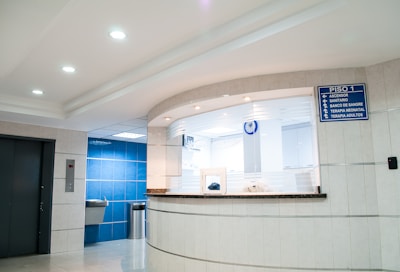 Patient Care
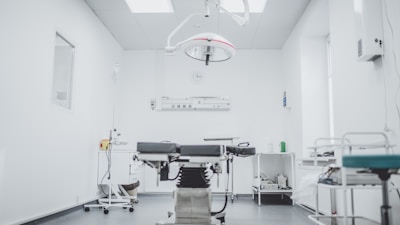 Consultation Room
 Medical Staff
 Recovery Suite
 Treatment Room