Epicanthoplasty
Overview
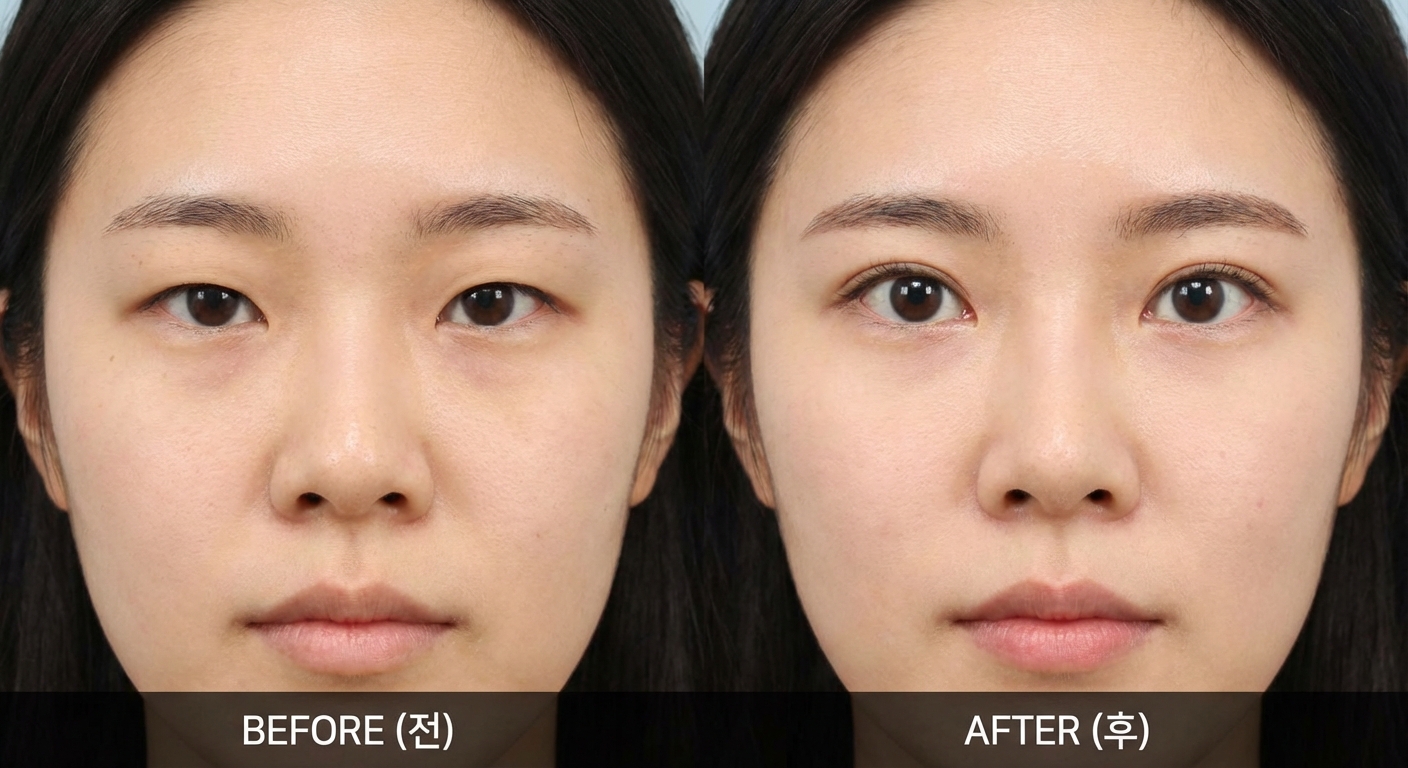
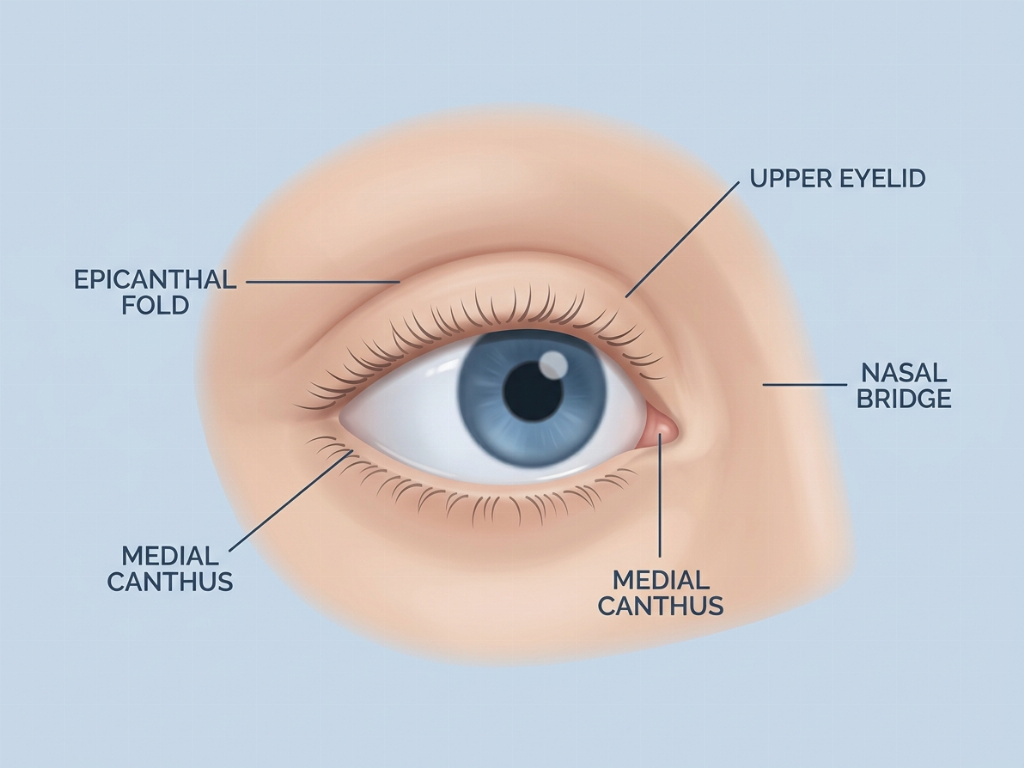
Epicanthoplasty is a specialized eyelid surgery focused on the inner corner of the eye (the medial canthus). It is primarily performed to address the epicanthal fold, a skin fold that covers the inner corner, which can make the eyes appear smaller, further apart, or slightly slanted. By carefully redistributing or removing this excess skin, the surgeon reveals the caruncle (the pink portion of the inner corner), effectively lengthening the eye horizontally.
While often performed alongside double eyelid surgery to create a more continuous and defined crease, epicanthoplasty is a distinct procedure. Modern techniques focus on tension-free suturing and hidden incisions to ensure the resulting scars are as discreet as possible within the natural contours of the eye.
Expected Results
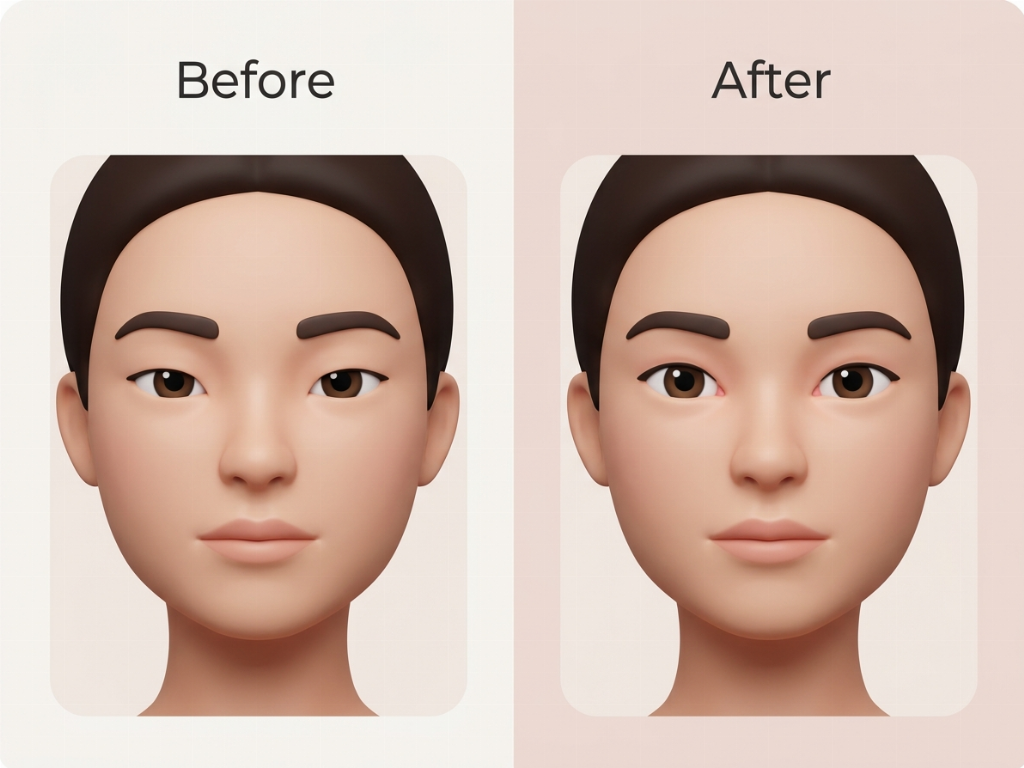
The primary outcome of an epicanthoplasty is an eye that looks larger, clearer, and more alert. By exposing the inner corner, the distance between the eyes can appear more balanced, and the overall eye shape becomes more almond-like. If performed with double eyelid surgery, it helps the crease start from a more visible point, preventing the 'tapered' look from being obscured by skin folds.
Results are typically permanent, though the area will continue to age naturally over time. It is important to have realistic expectations; the goal is to enhance the natural eye shape rather than fundamentally changing one's facial identity. Final results are usually visible after three to six months once all residual swelling has subsided.
Why Korea & Cost
South Korea is globally recognized for its expertise in Asian blepharoplasty and canthoplasty. Surgeons here have refined specific methods, such as the Magic Epicanthoplasty or 'redraping' technique, which are designed to help minimize the risk of hypertrophic scarring—a common concern with older inner-corner procedures. The high volume of cases handled by board-certified specialists in Seoul ensures a deep understanding of delicate periorbital anatomy.
The cost of epicanthoplasty in Korea varies based on the complexity of the fold, the specific surgical technique used, and whether it is combined with other procedures. Factors such as the surgeon's experience and the clinic's specialized aftercare facilities also influence the final quote. A personalized consultation is necessary to determine the exact surgical plan and associated fees.
Recovery & Aftercare
Recovery from epicanthoplasty is relatively quick, with most patients returning to non-strenuous daily activities within a week. Initial swelling and bruising are common around the inner corners but typically peak within the first 48 hours. Stitches are usually removed 5 to 7 days after the procedure, after which the incision lines will appear slightly pink before fading over several months.
Adhering to aftercare instructions is vital for preventing visible scarring. This includes keeping the area clean, avoiding eye makeup for at least two weeks, and protecting the eyes from UV exposure. Patients are advised to avoid rubbing their eyes or wearing contact lenses during the initial healing phase to prevent tension on the delicate incision sites.
Who Is It For?
- Individuals with a prominent epicanthal fold covering the inner eye
- Those who feel their eyes look too far apart or appear small
- Patients seeking a more defined or 'open' inner eye corner
- Individuals undergoing double eyelid surgery who want a continuous crease
- Those with realistic expectations for subtle horizontal eye lengthening
Benefits
- Creates a wider and more refreshed eye appearance
- Balances the inter-canthal distance between the eyes
- Enhances the results of concurrent double eyelid surgery
- Requires a relatively short recovery period compared to more invasive facial procedures
- Uses advanced redraping techniques to hide incision lines
How It's Done
- Precise marking of the epicanthal fold and desired inner corner shape
- Administration of local anesthesia with optional light sedation
- Small incisions made using the redraping or Z-plasty technique
- Removal or repositioning of excess skin and soft tissue
- Fine suturing of the incisions to minimize tension and scarring
Risks & Side Effects
- Temporary swelling and bruising
- Potential for visible scarring or hypertrophic scars
- Risk of under-correction or over-correction
- Asymmetry between the left and right eye
- Keloid formation in predisposed individuals
Recovery
- Stitches are typically removed 5 to 7 days post-surgery
- Major swelling usually subsides within 1 to 2 weeks
- Incision redness gradually fades over 3 to 6 months
- Most patients return to work within 7 days
- Contact lenses can usually be worn after 2 weeks
Aftercare
- Apply cold compresses for the first 48 hours to reduce swelling
- Keep the head elevated while sleeping for the first few days
- Gently clean the incision area with prescribed saline or ointment
- Avoid wearing eye makeup or false lashes for at least 14 days
- Wear sunglasses outdoors to protect healing tissue from hyperpigmentation
Precautions
- Avoid rubbing or applying pressure to the inner corners of the eyes
- Refrain from intense exercise or swimming for 4 weeks
- Do not consume alcohol or smoke as it delays the healing process
- Avoid aspirin or blood-thinning supplements unless cleared by a doctor
- Attend all scheduled follow-up appointments for stitch removal
| Duration | 30-45 min |
|---|---|
| Recovery | 5-10 days |
| Anesthesia | Local anesthesia |
| Price Range | approx. $370 – $1,110 (based on ₩500,000–₩1,500,000) |









 Clinic Introduction
 Medical Facility
 Patient Care
 Consultation Room
 Medical Staff
 Recovery Suite
 Treatment Room